


Accounting Degrees
An accounting degree is typically a 4 year degree but in some instances can be obtained in as little as 3 years. A bachelors of science in accounting is different than a bachelors in business where in a bachelors of business you may touch on the subject of accounting. With a bachelors of science in accounting your studies will revolve around the world of accounting through out your entire studies.
Individuals with a bachelors degree in accounting can advance their studies with a masters of science in accounting and a phd in accounting. A masters degree in accounting can typically be earned in as little as 2 years with some schools offering 1 year programs. A PhD in accounting program lasts at least 2 years.
Below we have listed some typical classes one should expect to take during their studies for a degree in accounting at all three levels of study.
Accounting Courses
Statistics
Statistics is the study of the collection, analysis, interpretation, presentation, and organization of data.[1] In applying statistics to, e.g., a scientific, industrial, or societal problem, it is necessary to begin with a population or process to be studied.
Calculus
Calculus is the mathematical study of change,[1] in the same way that geometry is the study of shape and algebra is the study of operations and their application to solving equations. It has two major branches, differential calculus (concerning rates of change and slopes of curves), and integral calculus (concerning accumulation of quantities and the areas under and between curves); these two branches are related to each other by the fundamental theorem of calculus. Both branches make use of the fundamental notions of convergence of infinite sequences and infinite series to a well-defined limit. Generally, modern calculus is considered to have been developed in the 17th century by Isaac Newton and Gottfried Leibniz. Today, calculus has widespread uses in science, engineering and economics and can solve many problems that algebra alone cannot.
Financial Accounting
Financial accounting (or financial accountancy) is the field of accounting concerned with the summary, analysis and reporting of financial transactions pertaining to a business.[1] This involves the preparation of financial statements available for public consumption. Stockholders, suppliers, banks, employees, government agencies, business owners, and other stakeholders are examples of people interested in receiving such information for decision making purposes.
Managerial Accounting
In Management accounting or managerial accounting, managers use the provisions of accounting information in order to better inform themselves before they decide matters within their organizations, which allows them to better manage and perform control functions.
Strategic Management
Strategic management involves formulation and implementation of the major goals and initiatives taken by a company's top management on behalf of owners, based on consideration of resources and an assessment of the internal and external environments in which the organization competes.[1]
Auditing
Auditing is defined as a systematic and independent examination of data, statements, records, operations and performances (financial or otherwise) of an enterprise for a stated purpose. In any auditing the auditor perceives and recognizes the propositions before him for examination, collects evidence, evaluates the same and on this basis formulates his judgment which is communicated through his audit report.[1]
Business Law
Commercial law, also known as business law, is the body of law that applies to the rights, relations, and conduct of persons and businesses engaged in commerce, merchandising, trade, and sales.[1] It is often considered to be a branch of civil law and deals with issues of both private law and public law.
Corporate Tax
Corporate tax is the taxation of corporations and their shareholders. You will find yourself studying corporate reorganizations, operations, liquidation, corporate divisions and tax attributes.
Marketing
Marketing is the methodology of communicating the value of a product or service to customers, for the purpose of selling that product or service.
Quantitative Methods
In most physical and biological sciences, the use of either quantitative or qualitative methods is uncontroversial, and each is used when appropriate. In the social sciences, particularly in sociology, social anthropology and psychology, the use of one or other type of method can be a matter of controversy and even ideology, with particular schools of thought within each discipline favoring one type of method and pouring scorn on to the other. The majority tendency throughout the history of social science, however, is to use eclectic approaches-by combining both methods. Qualitative methods might be used to understand the meaning of the conclusions produced by quantitative methods. Using quantitative methods, it is possible to give precise and testable expression to qualitative ideas. This combination of quantitative and qualitative data gathering is often referred to as mixed-methods research.[8]
Macroeconomics
Macroeconomics (from the Greek prefix makro- meaning "large" and economics) is a branch of economics dealing with the performance, structure, behavior, and decision-making of an economy as a whole, rather than individual markets. This includes national, regional, and global economies.[1][2] With microeconomics, macroeconomics is one of the two most general fields in economics.
Macroeconomists study aggregated indicators such as GDP, unemployment rates, and price indexes to understand how the whole economy functions. Macroeconomists develop models that explain the relationship between such factors as national income, output, consumption, unemployment, inflation, savings, investment, international trade and international finance. In contrast, microeconomics is primarily focused on the actions of individual agents, such as firms and consumers, and how their behavior determines prices and quantities in specific markets.
While macroeconomics is a broad field of study, there are two areas of research that are emblematic of the discipline: the attempt to understand the causes and consequences of short-run fluctuations in national income (the business cycle), and the attempt to understand the determinants of long-run economic growth (increases in national income). Macroeconomic models and their forecasts are used by governments to assist in the development and evaluation of economic policy.
| Average Salaries For Accountants | |||||
|---|---|---|---|---|---|
| Accountant / Auditor | $72.5k/year | ||||
| Financial Analyst | $77/year | ||||
| Personal Financial Adviser | $100k/year | ||||
| Financial Examiner | $86k/year | ||||
| Management Analysts | $90k/year | ||||
| Tax Examiner,Collector,Agent | $56k/year | ||||
| Accounting Classes | |||||||
| Accounting Certificate | Best Accounting Schools | Accounting Degree Online | Online College Degree Programs | ||||
| MBA Accounting | PhD in Accounting | ||||||
| Forensic Accounting Degree | |||||||
| Accounting | |||||||
Schools that offer Bachelors for accounting

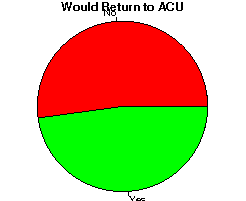

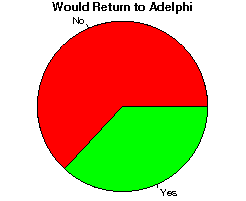
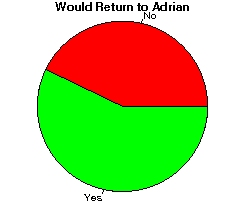

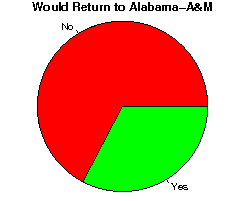
Accounting Major unemployment rate
Are things going well in Accounting?
Graduates who stayed in Accounting
| StudentsReview Advice!• What is a good school?• Statistical Significance • How to choose a Major • How to choose your Career • What you make of it? • How Ivy League Admissions works • On the Student/Faculty Ratio • FAFSA: Who is a Parent? • FAFSA: Parent Contribution • FAFSA: Dream out of reach • College Financial Planning • Survive College and Graduate • Sniffing Out Commuter Schools • Preparing for College: A HS Roadmap • Talking to Your Parents about College. • Is a top college worth it? • Why is college hard? • Why Kids Aren't Happy in Traditional Schools |

