


Business Classes
Operations Management
According to the United States Department of Education, operations management is the field concerned with managing and directing the physical and/or technical functions of a firm or organization, particularly those relating to development, production, and manufacturing. Operations management programs typically include instruction in principles of general management, manufacturing and production systems, factory management, equipment maintenance management, production control, industrial labor relations and skilled trades supervision, strategic manufacturing policy, systems analysis, productivity analysis and cost control, and materials planning.[2][3] Management, including operations management, is like engineering in that it blends art with applied science. People skills, creativity, rational analysis, and knowledge of technology are all required for success.
Management
Management in business and organizations is the function that coordinates the efforts of people to accomplish goals and objectives using available resources efficiently and effectively. Management comprises planning, organizing, staffing, leading or directing, and controlling an organization to accomplish the goal. Resourcing encompasses the deployment and manipulation of human resources, financial resources, technological resources, and natural resources. Management is also an academic discipline, a social science whose objective is to study social organizations.
Accounting
Accounting, or accountancy, is the measurement, processing and communication of financial information about economic entities.[1][2] Accounting, which has been called the "language of business",[3] measures the results of an organization's economic activities and conveys this information to a variety of users including investors, creditors, management, and regulators.[4] Practitioners of accounting are known as accountants. The terms accounting and financial reporting are often used as synonyms.
Finance
Finance is a field that deals with the allocation of assets and liabilities over time under conditions of certainty and uncertainty. Finance also applies and uses the theories of economics at some level. Finance can also be defined as the science of money management. A key point in finance is the time value of money, which states that purchasing power of one unit of currency can vary over time. Finance aims to price assets based on their risk level and their expected rate of return. Finance can be broken into three different sub-categories: public finance, corporate finance and personal finance.
Social Sciences
Social science is a major branch of science, and a major category of academic disciplines, concerned with society and the relationships among individuals within a society. It in turn has many branches, each of which is considered a "social science". The main social sciences include anthropology, economics, political science, psychology and sociology. In a wider sense, social science also includes amongst its branches some fields in the humanities[1] such as anthropology, archaeology, history, law and linguistics. The term is also sometimes used to refer specifically to the field of sociology, the original science of society, established in the 19th century.
Natural Sciences
Natural science is a major branch of science, that tries to explain and predict nature's phenomena, based on empirical evidence. In natural science, hypotheses must be verified scientifically to be regarded as scientific theory. Validity, accuracy, and social mechanisms ensuring quality control, such as peer review and repeatability of findings, are amongst the criteria and methods used for this purpose.
Natural science can be broken into 2 main branches: biology, and physical science. Physical science is further broken down into branches, including physics, astronomy, chemistry, and Earth science. All of these branches of natural science are divided into many further specialized branches (also known as fields), and each of these is known as a "natural science".
Ethics
Ethics, sometimes known as moral philosophy, is a branch of philosophy that involves systematizing, defending and recommending concepts of right and wrong conduct, often addressing disputes of moral diversity.[1] The term comes from the Greek word ethikos from ethos, which means "custom, habit". The superfield within philosophy known as axiology includes both ethics and aesthetics and is unified by each sub-branch's concern with value.[2] Philosophical ethics investigates what is the best way for humans to live, and what kinds of actions are right or wrong in particular circumstances.
Communications
Communication is the activity of conveying information through the exchange of ideas, feelings, intentions, attitudes, expectations, perceptions or commands, as by speech, non-verbal gestures, writings, behavior and possibly by other means such as electromagnetic, chemical or physical phenomena and smell. It is the meaningful exchange of information between two or more participants (machines, organisms or their parts).[2][3]
Organizational Behavior
Organizational behavior (OB) is "the study of human behavior in organizational settings, the interface between human behavior and the organization, and the organization itself." (p.4) [1] OB can be divided into three levels: the study of (a) individuals in organizations (micro-level), (b) work groups (meso-level), and (c) how organizations behave (macro-level).[2]
Business Law
Commercial law, also known as business law, is the body of law that applies to the rights, relations, and conduct of persons and businesses engaged in commerce, merchandising, trade, and sales.[1] It is often considered to be a branch of civil law and deals with issues of both private law and public law.
Commercial law includes within its compass such titles as principal and agent; carriage by land and sea; merchant shipping; guarantee; marine, fire, life, and accident insurance; bills of exchange and partnership. It can also be understood to regulate corporate contracts, hiring practices, and the manufacture and sales of consumer goods. Many countries have adopted civil codes that contain comprehensive statements of their commercial law.
Business Information Systems
Management information systems (MIS) is the study of people, technology, organizations and the relationships among them. MIS professionals help firms realize maximum benefit from investment in personnel, equipment, and business processes. MIS is a people-oriented field with an emphasis on service through technology Management information systems are typically computer systems used for data managing to make searching,analyzing data and spring information easier .
Management information systems are distinct from other information systems in that they are used to analyze and facilitate strategic and operational activities.[1]
Marketing
Marketing is the methodology of communicating the value of a product or service to customers, for the purpose of selling that product or service.
Economics
Economics is the social science that studies economic activity to gain an understanding of the processes that govern the production, distribution and consumption of goods and services in an economy.
Real Estate
Real estate is "property consisting of land and the buildings on it, along with its natural resources such as crops, minerals, or water; immovable property of this nature; an interest vested in this; (also) an item of real property; (more generally) buildings or housing in general. Also: the business of real estate; the profession of buying, selling, or renting land, buildings or housing."[1]
| Title | Average Annually | Top 10% Annually |
|---|---|---|
| Lodging Manager | $55k/annually | $92k/annually |
| Gaming Manager | $73k/annually | $117k/annually |
| Food Service Manager | $53k/annually | $82k/annually |
| Event Planner | $50k/annually | $79k/annually |
| Travel Agent | $37k/annually | $57k/annually |
| Tour Director | $26k/annually | $37k/annually |
| Head Chef | $46k/annually | $74k/annually |
| Information Technology | $120k/annually | $150k/annually |
| Health Care | $101k/year | $120k+/annually |
| Administrative Services Manager | $81k/year | |
| Advertising/Promotions/Marketing | $115/year | |
| Engineering Manager | $115/year | |
| Compensation/Benefits | $95k/year | |
| Construction Manager | $82k/year | |
| Financial Manager | $109k/year | |
| Business Executive | $101k/year | |
| Training / Development | $95k/year | |
| Sales Managers | $105k/year |
| Business Management Degree | |
| Master In Business Administration | |
| Best Business Colleges | |
| Online Business Degrees | |
| Online College Degree Programs | |
Schools that offer Bachelors for business



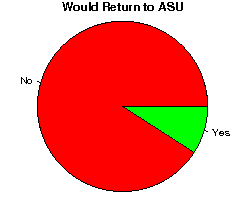



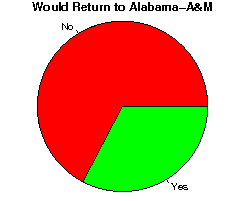
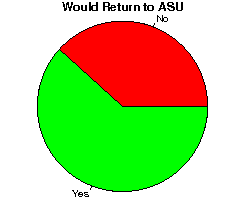

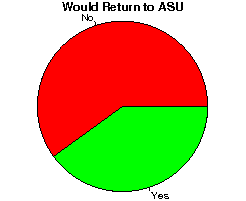
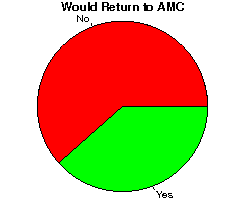
Business - Management and Administration Major unemployment rate
Are things going well in Business - Management and Administration?
Graduates who stayed in Business - Management and Administration
| StudentsReview Advice!• What is a good school?• Statistical Significance • How to choose a Major • How to choose your Career • What you make of it? • How Ivy League Admissions works • On the Student/Faculty Ratio • FAFSA: Who is a Parent? • FAFSA: Parent Contribution • FAFSA: Dream out of reach • College Financial Planning • Survive College and Graduate • Sniffing Out Commuter Schools • Preparing for College: A HS Roadmap • Talking to Your Parents about College. • Is a top college worth it? • Why is college hard? • Why Kids Aren't Happy in Traditional Schools |

